Lancaster Maloney – Dashboard management system (FMS/CMMS)

- Client:
- Lancaster Maloney
- Year:
- 2020
- Project type:
- Dashboard management system (FMS/CMMS)
- Industry:
- Property care and management
- Platforms:
- Web
- Technology stack:
- CoreUI, Vue.js, Strapi, PHP, MySQL, CentOS
Project description
Lancaster Maloney was established in 2003 and has grown into an innovative, dynamic principal design practice of talented professionals – expert in the design, property care and management of the built environment.
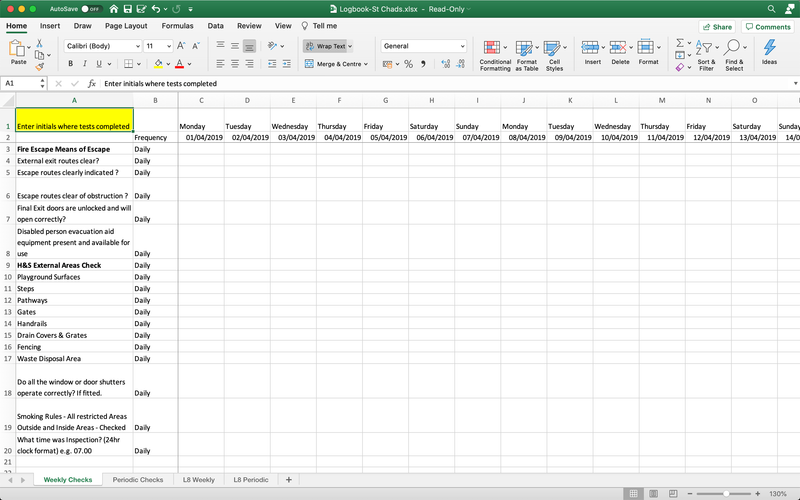
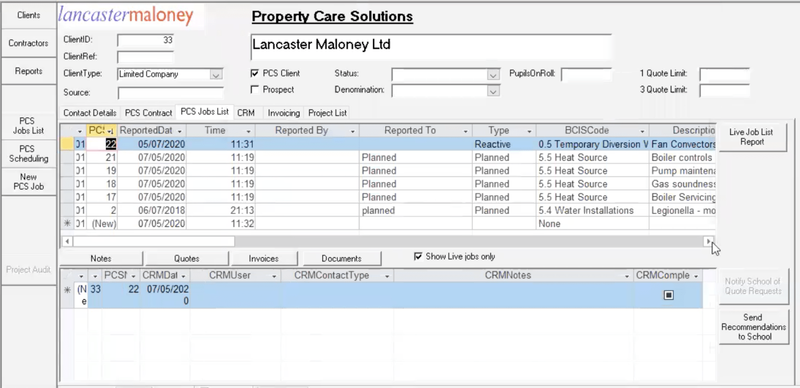
The aim of this project was to improve Lancaster Maloney’s internal property management processes. They had been using Microsoft Access database for many years to manage their property maintenance and repairs prior to the web-based application we had developed.
Process
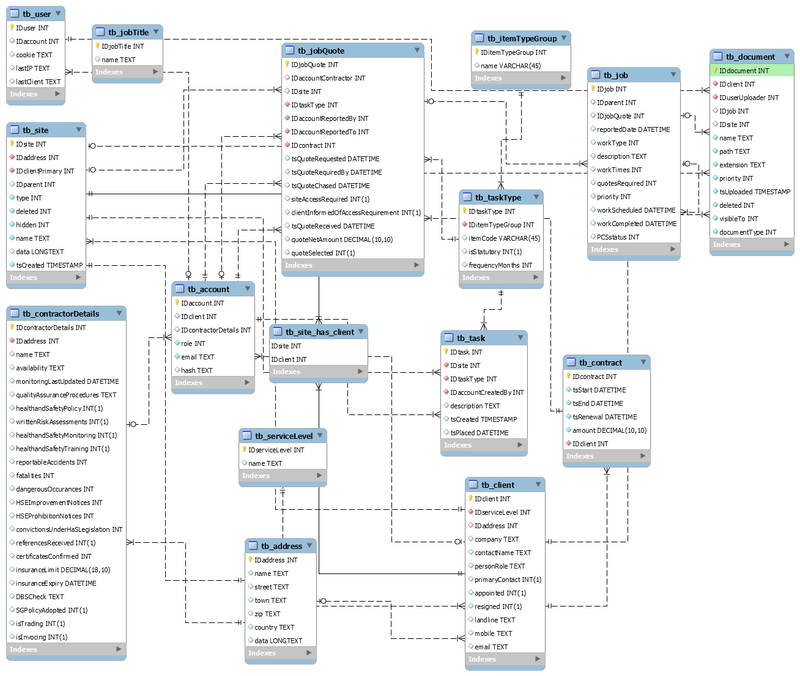
The most intricate part of the process was establishing the models and relationships between them. The system was fairly sophisticated so there were many close discussions with the LM team to get it right.
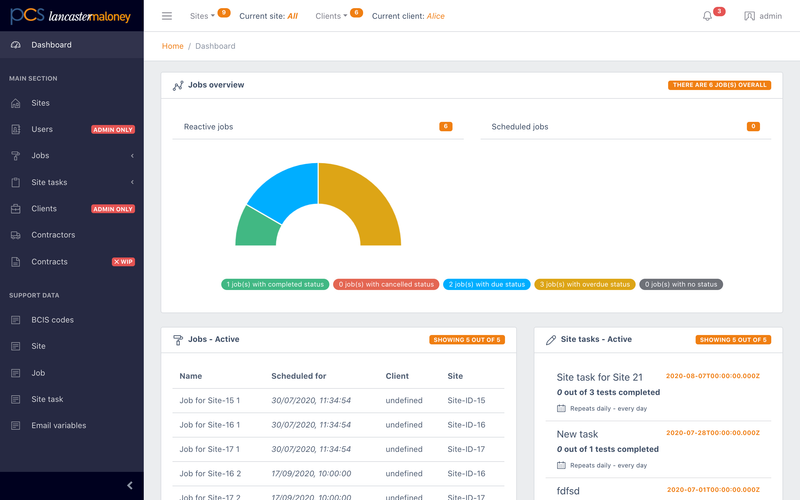
There were a few datasets in its core – each with an ability to perform basic CRUD operations inside the dashboard environment:
- Jobs
- Clients
- Contractors
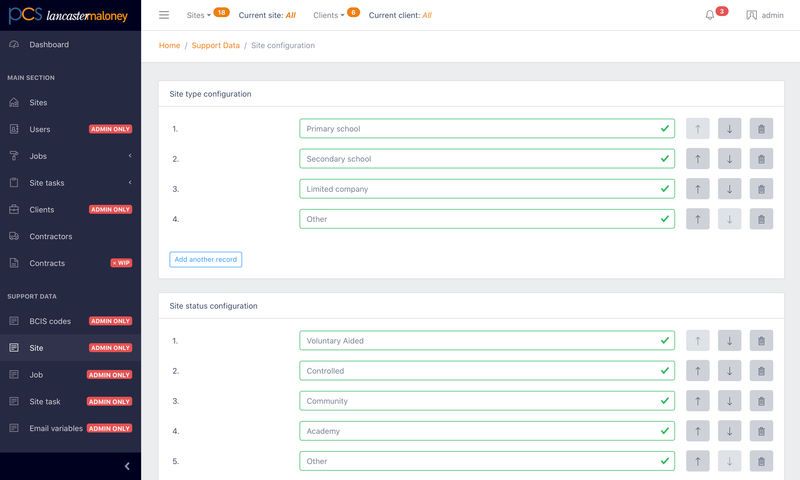
- Sites
- Site tasks
- Contracts
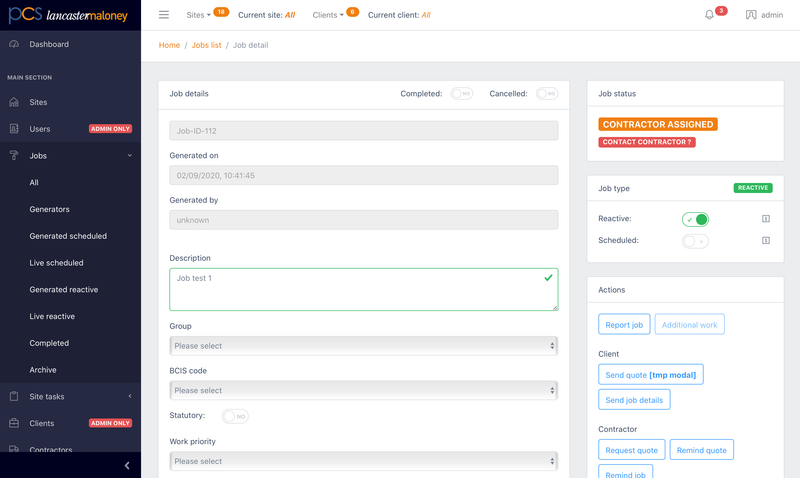
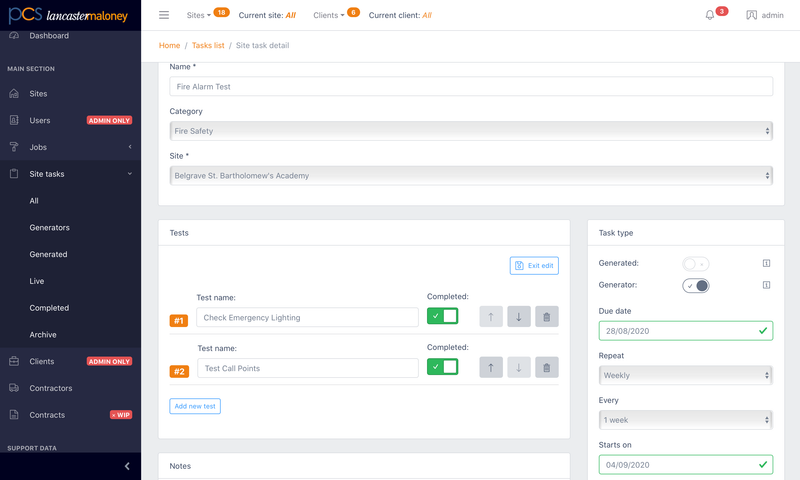
- Planned Preventive Maintenance - legally required tasks, repeated weekly, monthly and/or yearly
- Reactive Maintenance - one-off jobs, react to the current needs/issues
- Daily Site Manager Tasks - repeat daily, site specific
- Job status - following internal protocols
- Email integration
We also implemented multiple user access levels:
- Administrator - full access, for internal use
- Facility manager - access to a specific client with a subset of properties
- Site manager - access to a single site
